Ready to Start you Retail Chain?
Become Top Products Retailer
Get Brand Tools, Machinery, Accessories and Equipment and Start your Retail Business

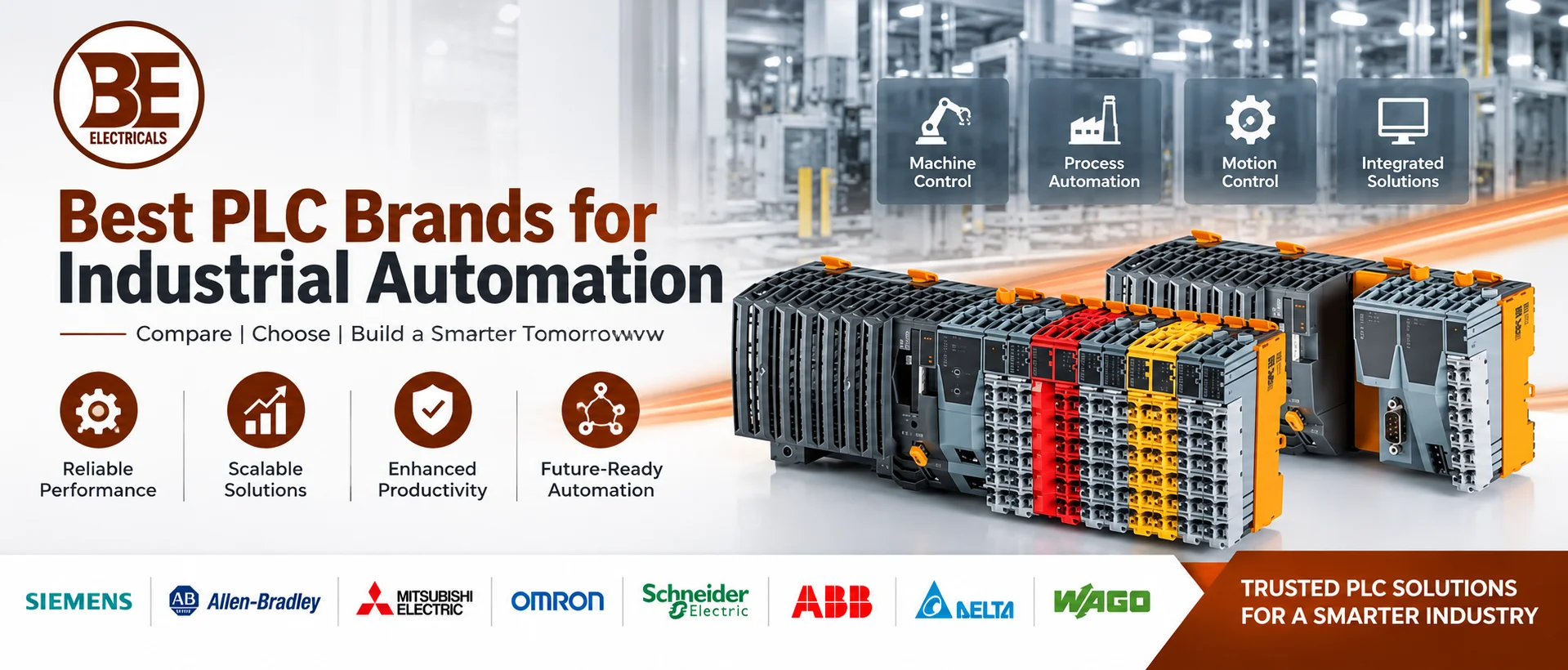
Choosing a programmable logic controller is rarely a simple brand decision. A PLC may sit inside one control panel, but its influence extends far beyond the cabinet. It affects machine response, I/O architecture, communication with drives and HMIs, maintenance practices, engineering software, spare-part planning, future expansion and the skills your plant team needs to keep production running.
That is why buyers searching for the best PLC brands should avoid choosing only by popularity. The right industrial PLC is the one that fits the actual application, integrates with the existing control environment, can be supported over its expected lifecycle and gives engineers enough flexibility for future changes.
For Indian manufacturers, OEMs, panel builders, system integrators and procurement teams, the most frequently evaluated PLC manufacturers include Siemens, Allen-Bradley, Mitsubishi Electric, OMRON, Schneider Electric, ABB, Delta Electronics and WAGO. Each has a different strength profile. This guide compares them from a practical industrial automation perspective so you can shortlist the right platform instead of simply buying the most familiar name.
There is no single best PLC brand for every industrial automation project.
Siemens is widely considered when plants want a broad, integrated automation ecosystem around SIMATIC and TIA Portal. Allen-Bradley is a major choice for Rockwell Automation environments and applications built around Logix controllers and EtherNet/IP. Mitsubishi Electric is strong in compact machine automation, motion-oriented applications and factory automation. OMRON is often considered where PLC control, motion, safety, vision and EtherCAT-based machine automation need to work closely together.
Schneider Electric offers the Modicon range for machine and process control, including PLC and PAC platforms. ABB's AC500 family covers compact, scalable and safety-oriented control applications. Delta is frequently considered for value-focused machine automation where PLCs, HMIs, drives and motion products are combined. WAGO is relevant where open architectures, CODESYS, modular I/O and industrial communication flexibility are important.
The best choice depends on control complexity, I/O, motion, safety, communication, software familiarity, support and long-term availability.
A programmable logic controller is an industrial computer that monitors inputs, executes control logic and commands outputs in real time. In a packaging machine, for example, it can read sensors and trigger conveyors, cylinders, servos or safety sequences.
The basic control principle is similar across PLC manufacturers, but programming software, communication, I/O architecture, safety functions, diagnostics and integration can differ significantly. A low-cost PLC may become expensive if it needs extra gateways, software or redesign, while a premium controller may be unnecessary for a simple machine. PLC selection should therefore be treated as a lifecycle decision, not just a component purchase.
Siemens is one of the most widely recognized names in PLC automation. Its SIMATIC portfolio covers scalable industrial control, from compact machine applications to larger and more connected production environments. Siemens also integrates SIMATIC controllers with the TIA Portal engineering environment, which helps engineers configure and program multiple automation components in one ecosystem.
Common PLC families include the SIMATIC S7 range, with different controller levels for compact, standard, advanced and distributed automation requirements.
Why buyers consider Siemens:
Siemens is particularly relevant for plants already using SIMATIC hardware or seeking standardized automation across multiple machines. Buyers should still confirm CPU, I/O, communication and software requirements before procurement.
Allen-Bradley programmable controllers are widely used in industrial automation, particularly where Rockwell Automation architecture is already present. The current controller portfolio includes CompactLogix, ControlLogix and Micro800 families for different application sizes.
CompactLogix is commonly associated with machine-level and mid-range applications, while ControlLogix addresses larger, more complex control architectures. The Micro800 family provides compact options for smaller standalone machines.
Why buyers consider Allen-Bradley:
Allen-Bradley is a logical choice when Studio 5000, EtherNet/IP, Rockwell I/O, HMIs or drives are already installed. For replacement orders, verify lifecycle status because older controller families may have migration paths rather than direct availability.
Mitsubishi Electric's MELSEC PLC range is closely associated with factory and machine automation. Its current portfolio includes families such as MELSEC iQ-R and iQ-F, alongside established controller series used across industrial installations.
The iQ-F family provides compact, all-in-one control for standalone machines and networked systems, while the iQ-R family addresses higher-performance automation environments.
Why buyers consider Mitsubishi PLCs:
Mitsubishi is especially relevant when machines already use Mitsubishi servos, drives, HMIs or MELSEC architecture. For brownfield systems, confirm the controller generation, software, expansion compatibility and spare availability.
OMRON offers PLCs and machine automation controllers designed for high-speed industrial control. Its NX and NJ controller platforms are built around integrated machine automation, including synchronized I/O, motion, safety and other devices through technologies such as EtherCAT.
Why buyers consider OMRON:
OMRON is attractive where machines need coordinated control across motion, sensing, safety and inspection. Compare the complete architecture rather than CPU price alone, because integrated control may reduce separate devices and gateways.
Schneider Electric's Modicon family covers PLC and PAC solutions for industrial machines and process automation. Its controller range includes compact machine controllers as well as more advanced platforms designed for larger, connected and high-availability applications.
The Modicon M200, M221, M241, M251 and M262 families address various machine-control requirements, while platforms such as M340 and M580 serve more advanced process and plant control needs.
Why buyers consider Schneider Electric:
Schneider can be a strong candidate for facilities already standardized on its electrical and automation systems. Confirm whether the project needs a machine PLC, PAC, motion controller or process-oriented platform before selecting a model.
ABB's AC500 PLC platform is designed to cover automation tasks ranging from compact applications to more demanding industrial systems. The portfolio includes AC500-eCo for cost-sensitive compact control, AC500 for broader scalable automation and AC500-S for safety-related applications.
Why buyers consider ABB PLCs:
ABB can be particularly relevant when projects already include ABB drives, motors or automation equipment. Confirm communication, expansion and environmental requirements during specification.
Delta Electronics offers multiple PLC families for industrial control, including DVP, AS and AH series products. Delta is widely considered in OEM machinery and cost-conscious automation projects where PLCs are integrated with Delta HMIs, variable frequency drives and motion-control products.
Why buyers consider Delta PLCs:
Delta can be a practical commercial fit where the control scope is clear and designers want to balance functionality with budget. Final selection should still depend on performance, networking, motion and support requirements.
WAGO's controller portfolio combines PLC control with modular I/O, open communication and CODESYS-based engineering. Its PFC and compact controller ranges are particularly relevant for users that value protocol flexibility, distributed architectures and Linux-based or open automation concepts.
Why buyers consider WAGO:
WAGO is attractive where openness and connectivity are priorities. Confirm CODESYS skills, required protocols, device libraries and integration before deployment.
PLC Brand Comparison for Industrial Buyers
| Brand | Common Platform | Strong Fit | Key Buying Consideration |
| Siemens | SIMATIC S7 | Integrated factory automation, machine and plant control | TIA Portal ecosystem, CPU level, distributed I/O and licensing |
| Allen-Bradley | Micro800, CompactLogix, ControlLogix | Rockwell-based plants, machine and line control | Product lifecycle, Studio 5000 compatibility and EtherNet/IP architecture |
| Mitsubishi Electric | MELSEC iQ-F, iQ-R | OEM machines, motion and factory automation | Series generation, expansion compatibility and software |
| OMRON | NX, NJ | High-speed machine automation, motion and safety | EtherCAT architecture and complete machine ecosystem |
| Schneider Electric | Modicon | Machine, infrastructure and process control | Match machine PLC versus PAC/process platform |
| ABB | AC500 | Scalable automation, safety and ABB-integrated systems | Communication, safety level and expansion requirements |
| Delta Electronics | DVP, AS, AH | Cost-sensitive OEM and machine automation | Confirm performance, networking and motion needs |
| WAGO | PFC, Compact Controller | Open, modular and distributed automation | CODESYS skills, protocol support and I/O architecture |
The table is a shortlist guide, not a universal ranking. The right platform changes with machine size, speed, safety, process requirements and plant architecture.
Define what the controller must actually do. Record digital and analog I/O, high-speed counters, PID loops, motion axes, safety functions, temperature control, recipe handling, data logging and remote access requirements.
Do not size a PLC only for the current panel. Reserve practical capacity for future sensors, actuators and communication devices.
Simple sequence control may not need a high-end CPU, while high-speed assembly, coordinated motion and complex process control may require faster processing.
Check every device that must communicate with the PLC: HMI, VFD, servo drive, SCADA, remote I/O, barcode reader, vision system, energy meter, safety controller and plant network. EtherNet/IP, PROFINET, EtherCAT, Modbus TCP, Modbus RTU, OPC UA and vendor-specific networks can strongly influence brand choice.
Programming software affects commissioning and maintenance. Check licensing, version compatibility, diagnostics, simulation and whether your engineers already know the platform.
Standardization often reduces maintenance risk. If technicians already troubleshoot one PLC family across a plant, introducing another ecosystem should have a clear technical or commercial reason.
PLC automation systems may remain in service for many years. Ask about product lifecycle, recommended replacements, migration options and availability of CPU, power supply, I/O and communication modules.
Controller price is only part of the project. Include software, I/O, network hardware, engineering, commissioning, spares and training.
For compact standalone machines, buyers often compare compact Siemens, Micro800, Mitsubishi iQ-F, Schneider Modicon, OMRON and Delta platforms. Integrated production lines place more weight on plant standards, networking, coordinated motion, safety and data integration. Process applications add requirements such as redundancy, analog control and SCADA integration. OEMs usually prioritize compact hardware, reusable programming, predictable availability and integration with HMI, servo and drive products.
Common mistakes include choosing by brand reputation without checking the exact model, replacing an obsolete CPU without reviewing I/O and communication compatibility, and ignoring software or licensing costs. Availability also matters: if expansion modules or replacement CPUs are difficult to source, future downtime risk increases.
Industrial projects often require PLC CPUs, I/O modules, HMIs, drives, sensors, relays and networking products from multiple brands. BE Electricals lists ABB, Allen-Bradley, Mitsubishi Electric, OMRON, Schneider Electric, Siemens, WAGO, Delta Electronics and other automation manufacturers in its portfolio, which can simplify mixed-brand RFQs. For accurate sourcing, provide the exact manufacturer, part number, series, quantity and communication requirement.
Before approving a PLC purchase, confirm these points:
The best PLC brands are the ones that meet these requirements with the lowest practical lifecycle risk for your specific automation system.
Commonly evaluated PLC brands include Siemens, Allen-Bradley, Mitsubishi Electric, OMRON, Schneider Electric, ABB, Delta Electronics and WAGO. The best option depends on application size, communication, motion, safety, engineering software, support and existing plant standards.
Siemens is a major industrial automation manufacturer with a broad SIMATIC portfolio, but it is not automatically the best choice for every project. It is especially relevant when TIA Portal, PROFINET, Siemens drives, HMIs or SIMATIC infrastructure are already part of the system.
Neither brand is universally better. Allen-Bradley may fit plants standardized on Rockwell Automation and EtherNet/IP, while Siemens may fit plants built around SIMATIC, TIA Portal and PROFINET. Compare system architecture rather than brand name alone.
Small machines can use compact PLC families such as Siemens compact controllers, Allen-Bradley Micro800, Mitsubishi iQ-F, Schneider Modicon machine controllers, Delta DVP and other compact platforms. I/O count, communication and motion needs should determine the final model.
Mitsubishi Electric, OMRON, Siemens, Allen-Bradley, Schneider Electric and Delta all offer platforms that can support motion-related automation. The best choice depends on axis count, servo ecosystem, synchronization requirements and network architecture.
Manufacturing plants use many PLC manufacturers, including Siemens, Rockwell Automation/Allen-Bradley, Mitsubishi Electric, OMRON, Schneider Electric, ABB, Delta and WAGO. Brand choice often reflects plant standards and machine origin.
A PLC traditionally focuses on reliable machine and process logic, while PAC is commonly used for controllers with broader processing, networking and complex control capabilities. In modern automation, the functional boundary can overlap significantly.
Start with I/O, processing speed, memory, motion, safety, communication, environmental conditions, software and future expansion. Then compare controller families that satisfy those requirements.
Often yes, because standardization can simplify spares, programming, training and troubleshooting. A different platform may still be justified when it offers a specific technical or commercial advantage.
Very important. Software affects programming, diagnostics, commissioning, licensing and maintenance. A technically suitable PLC can still create operational difficulty if the plant lacks compatible software or trained engineers.
Check the complete part number, hardware revision, firmware, I/O configuration, communication modules, existing program backup, software compatibility and lifecycle status. Do not assume a newer CPU is a direct drop-in replacement.
BE Electricals lists multiple industrial automation brands including ABB, Allen-Bradley, Mitsubishi Electric, OMRON, Schneider Electric, Siemens, WAGO and Delta Electronics among its brand offerings. Availability should be confirmed against the exact part number and required quantity.
Not for every application. A high-performance controller may be unnecessary for simple sequence control. The better purchase is the PLC that meets performance, integration and lifecycle requirements without unnecessary complexity.
Send the manufacturer name, exact part number, series, quantity, required accessories, communication modules, power supply details and delivery location. For an existing machine, include the current controller and I/O details.
Selecting among the best PLC brands is ultimately an engineering and lifecycle decision. Siemens, Allen-Bradley, Mitsubishi Electric, OMRON, Schneider Electric, ABB, Delta and WAGO all offer capable industrial control platforms, but their strengths appear in different types of automation environments.
Start with the machine or process requirements, then compare controller architecture, software, networking, safety, motion, expansion and lifecycle support. This gives procurement teams a stronger basis for selection than brand popularity alone.
If you are sourcing PLCs, controllers, I/O modules or related automation products, share the brand, exact part number, quantity and application details with BE Electricals for availability and procurement support across India. Explore BE Electricals for industrial automation products and learn more about BE Electricals and its automation solutions.
For PLC sourcing and procurement support, contact BE Electricals with the exact manufacturer, part number, quantity and application details.