Ready to Start you Retail Chain?
Become Top Products Retailer
Get Brand Tools, Machinery, Accessories and Equipment and Start your Retail Business

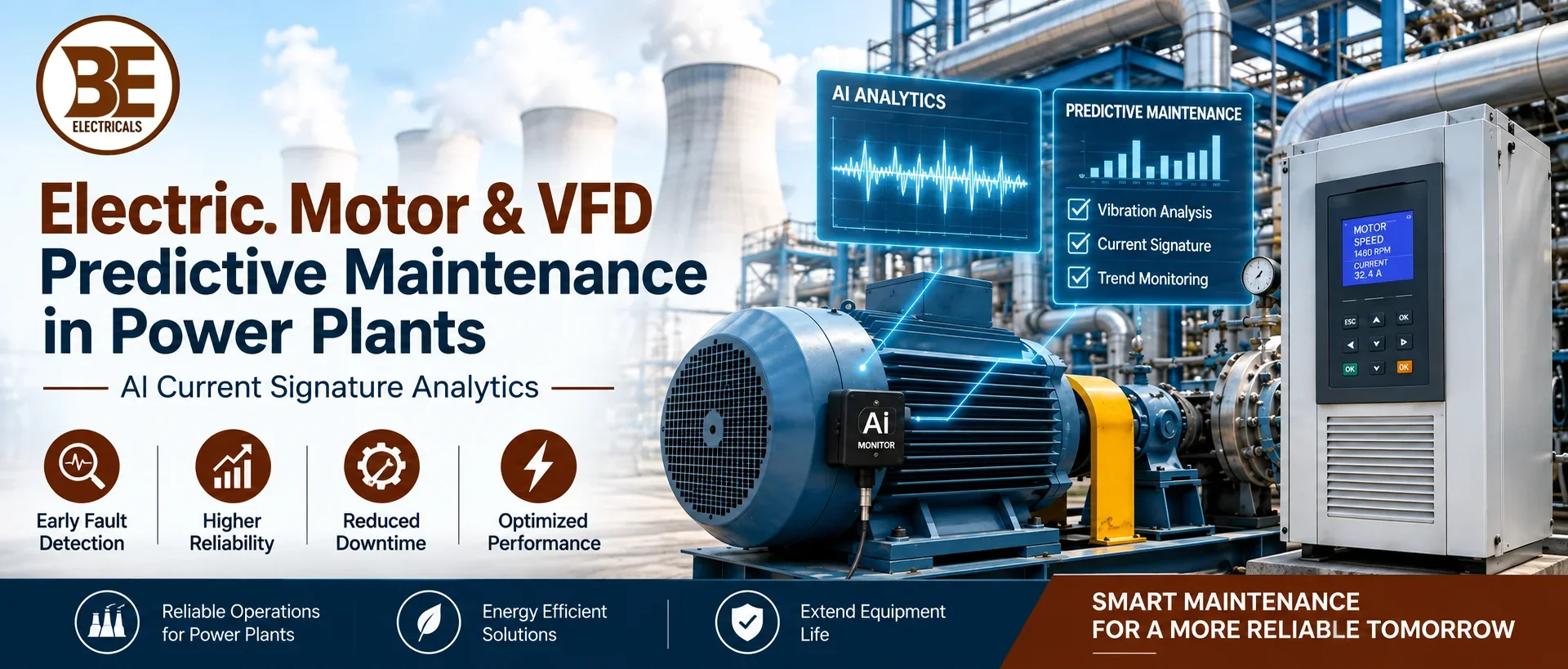
Choosing a VFD for an industrial motor is not simply a matter of matching the motor kW or HP printed on the nameplate. A variable frequency drive has to work with the motor, incoming power supply, driven load, control system and operating environment as one complete system. If any of these are overlooked, the result can be nuisance tripping, poor torque, overheating, unreliable speed control or a drive that is unnecessarily expensive.
For plant engineers, OEMs, maintenance teams, panel builders and procurement managers, the goal is to select a drive with the correct voltage class, output current, overload capability, control method, environmental rating and communication features. This guide explains the selection process step by step.
To select a VFD for an industrial motor, first match the drive to the available supply voltage and motor voltage. Then size it using the motor's full-load current rather than motor power alone. Identify whether the load is variable torque or constant torque, determine the required overload duty, check minimum and maximum operating speed, and confirm whether the application needs braking, vector control, encoder feedback, safety functions or industrial communication.
Finally, account for ambient temperature, altitude, enclosure/IP rating, cable length, harmonics, EMC requirements and future expansion. The selected drive's continuous output current must meet or exceed the motor current after any required derating.
A variable frequency drive, commonly called a VFD, AC drive or variable speed drive, controls the speed and torque of an AC motor by changing the frequency and voltage supplied to it. Instead of running a motor only at fixed line frequency, the drive allows the process to operate at the speed actually required.
In pumps and fans, this can reduce energy use when full speed is unnecessary. On conveyors, mixers and machinery, a VFD provides controlled acceleration, deceleration and process speed. Correct selection still depends on the application.
The motor nameplate should be the first reference point. Record at least:
The most important sizing value is usually motor rated current. Two motors with the same kW rating can have different current requirements because of voltage, efficiency, design and operating conditions. This is why a VFD should not be selected only from a kW-to-kW comparison.
For replacement projects, record the existing VFD model, output current, supply voltage, overload duty, control mode and accessories because a newer drive may not be a direct electrical or mechanical replacement.
A VFD must be suitable for the incoming electrical supply and the motor it will control. Common industrial systems may use 200-240 V, 380-415 V, 440-480 V or higher voltage classes depending on the plant and application.
Do not assume that a drive with the correct kW rating is acceptable if its voltage class does not match. Confirm incoming line voltage and phase, the VFD input range, output capability and motor rated voltage. Where supply and motor voltage differ, use the manufacturer's current-rating tables rather than power alone.
This is one of the most important rules in VFD selection.
The drive's continuous output current should be equal to or greater than the motor's required full-load current after considering the duty rating and any derating factors. Motor kW or HP is useful for shortlisting a frame size, but current is the stronger engineering check.
For example, a 22 kW motor rated at 42 A needs a drive able to supply that current under the actual duty and ambient conditions. A 22 kW drive with an inadequate heavy-duty current rating may still be unsuitable. Larger drives can often run smaller motors, but overload protection must be adjustable to the correct motor current.
The mechanical load determines how much torque and overload the VFD must provide.
Centrifugal fans and centrifugal pumps are typical variable-torque applications. Torque demand falls significantly as speed reduces. These loads usually do not require the same overload capability as conveyors or crushers and may allow selection under a normal-duty or light-overload rating, depending on the drive.
Typical applications include:
Constant-torque applications require significant torque across a wide speed range and usually need a heavier overload rating. Typical examples include conveyors, mixers, extruders, positive displacement pumps, crushers, hoists and material-handling equipment. Do not apply pump-and-fan sizing assumptions to these loads simply because motor kW is similar.
Many VFD manufacturers publish more than one current or power rating for the same drive frame. A drive may have a higher power rating for light or normal duty and a lower power rating when heavy overload is required.
Heavy-duty applications need additional current for breakaway torque, acceleration, shock loads or periodic overload. If the process regularly demands high starting or accelerating torque, select the VFD using its heavy-duty current rating.
Check whether the load starts under mechanical load, needs high breakaway torque, accelerates rapidly, experiences repeated peaks or shock loading, and whether the manufacturer publishes separate normal- and heavy-duty currents. Ignoring overload duty is a common reason for production trips.
Different applications require different levels of speed and torque control.
Volts-per-hertz control is simple and reliable for many pumps, fans and basic conveyor applications. It is generally suitable where extremely precise torque or speed regulation is not required.
Sensorless vector control provides better torque response and speed regulation without a motor encoder. It is commonly used for conveyors, mixers and machinery that need stronger low-speed performance.
Applications requiring very accurate speed, position-related performance or high torque at very low speed may need encoder feedback and a drive that supports closed-loop vector control.
Basic process speed control may not need encoder capability, while demanding motion, hoisting or synchronized machinery may require it.
A VFD can reduce motor speed, but the motor's thermal limits still matter. Standard self-cooled motors depend partly on the shaft-mounted fan. At low RPM, cooling airflow falls even though the motor may still be producing substantial torque.
For continuous low-speed, high-torque duty, consider an inverter-duty motor, forced ventilation, thermal sensors or appropriate derating. Also confirm maximum motor frequency and mechanical speed because operation above base speed may exceed motor, bearing or driven-machine limits.
VFD selection is affected by how quickly the machine must start and stop.
A high-inertia load may require significant acceleration current. During rapid deceleration, energy can flow back from the motor toward the DC bus. If the drive cannot handle this energy, it may trip on DC-bus overvoltage.
Depending on the application, the solution may be a longer deceleration time, DC injection, a braking resistor, regenerative drive or common DC bus. Centrifuges, hoists, unwinders and other high-inertia machines deserve particular attention.
Drive ratings assume defined environmental conditions. High temperature, altitude or switching frequency can require derating. Check ambient temperature, altitude, cabinet ventilation, dust, moisture, installation location, enclosure rating and heat from nearby panel components. A clean IP20 panel installation is very different from a drive mounted near a dusty process line.
A VFD is a power-electronic load. Its input rectifier can introduce harmonics into the electrical system, while its fast output switching creates high-frequency voltage effects on the motor cable.
Depending on drive size and plant requirements, the system may need line reactors, DC chokes, harmonic or EMC filters, shielded cable, output reactors, dV/dt filters or sine-wave filters. Long motor cables and older insulation deserve particular review because reflected-wave voltage can increase stress at the motor terminals.
Modern VFDs often work on a PLC or plant network. Confirm whether the project needs Modbus, PROFINET, EtherNet/IP, EtherCAT, PROFIBUS, CANopen or another protocol, and whether it is built in or requires an option card. Good network integration also gives maintenance teams access to alarms and operating data.
A VFD should be part of the machine safety and protection strategy. Useful features include STO, motor overload, phase-loss, overcurrent, overvoltage, thermal and ground-fault monitoring. Where functional safety is required, verify the rating and complete machine architecture; STO does not replace mechanical isolation or every safe-stop function.
VFD Selection Table: What to Check Before Buying
| Selection Parameter | What to Confirm | Why It Matters |
|---|---|---|
| Motor current | Nameplate FLA and VFD continuous output current | Prevents undersizing and overload trips |
| Voltage | Supply, drive input and motor voltage | Ensures electrical compatibility |
| Load type | Variable torque or constant torque | Determines duty and overload requirement |
| Overload | Normal/light duty versus heavy duty | Affects usable current and drive size |
| Speed range | Minimum, base and maximum speed | Protects motor cooling and mechanics |
| Control method | V/Hz, sensorless vector or encoder feedback | Determines torque and speed performance |
| Braking | Coast, ramp, resistor or regenerative | Prevents deceleration-related trips |
| Environment | Temperature, altitude, dust and moisture | May require derating or higher enclosure rating |
| Communication | Modbus, PROFINET, EtherNet/IP, etc. | Enables PLC/HMI/SCADA integration |
| Harmonics/EMC | Reactors, filters and cable requirements | Improves power quality and EMC performance |
| Safety | STO and machine safety requirements | Supports the required safety architecture |
Oversizing can be justified, but it should be based on engineering conditions rather than a blanket rule such as “always select one size higher.”
A larger VFD may be appropriate when there is high overload demand, high ambient temperature, altitude derating, frequent acceleration, unusual motor current or a future motor upgrade. However, unnecessary oversizing increases cost and can complicate motor protection settings or advanced control performance.
The better approach is to calculate the required continuous and overload current, apply manufacturer derating factors, then select the next drive rating that satisfies those conditions.
The first mistake is selecting only by motor kW. Always verify current.
The second is ignoring the load. A 30 kW fan and a 30 kW conveyor can require different drive duty ratings.
The third is overlooking the environment. A drive that is correctly sized at 40 °C may need derating in a hotter enclosure.
The fourth is failing to plan braking. Fast stopping of high-inertia loads can cause repeated overvoltage faults.
The fifth is ordering the drive before confirming communication. Optional network cards, filters and braking hardware can affect both cost and delivery.
Finally, avoid copying the old VFD rating without checking why it was selected. The old drive may have been oversized, incorrectly configured or chosen for conditions that have since changed.
A clear RFQ helps the supplier identify the right variable frequency drive quickly. Include:
BE Electricals lists automation and drive brands including ABB, Siemens, Schneider Electric, Allen-Bradley, Mitsubishi Electric, Danfoss, Delta Electronics and Fuji Electric. Its ABB pages specifically cover AC drives and VFDs for pumps, fans, compressors and conveyors. Complete motor and application data helps narrow the correct series and current rating before procurement.
Match the supply voltage and motor voltage, then size the VFD from motor full-load current. Check load type, overload duty, control method, speed range, braking, environment, communication and any derating requirements before selecting the final model.
Use motor current as the critical sizing check. kW or HP helps identify a likely drive range, but the selected VFD's rated output current must meet or exceed the motor requirement under the intended duty and environmental conditions.
Often yes, provided the drive can be configured with the smaller motor's correct nameplate data and overload protection range. Very large oversizing may affect some control modes, so confirm the manufacturer's recommendations.
Normally no. If motor current exceeds the drive's continuous or overload rating, the VFD can trip, overheat or fail to provide required torque. Selection should be based on actual current and duty.
For common industrial AC-motor applications, the terms are often used interchangeably. VFD specifically describes a drive that controls motor speed by varying output frequency and voltage.
Heavy-duty rating is the drive's usable current or power rating when higher overload is required. It is important for constant-torque loads, high breakaway torque, frequent acceleration and applications with shock loading.
Conveyors, mixers, crushers, extruders, hoists, positive displacement pumps and material-handling machines commonly need closer heavy-duty evaluation than centrifugal pumps or fans.
Not equally. The biggest savings are often seen on variable-torque loads such as centrifugal pumps and fans when the process can operate below full speed. Constant-speed, fully loaded processes may offer less energy-saving potential.
It can, but continuous high-torque operation at low speed may cause cooling problems because the motor's shaft fan also slows down. Forced cooling or an inverter-duty motor may be required.
Only when the application generates more regenerative energy during deceleration than the drive can manage through its normal DC bus. High-inertia and rapid-stop applications are common cases where a braking resistor or regenerative solution may be needed.
Long VFD-to-motor cables can increase reflected-wave voltage and EMC issues. Depending on the drive, motor and cable length, an output reactor, dV/dt filter or sine-wave filter may be recommended.
Yes. Drives have specified ambient temperature limits, and operation above certain temperatures can require current derating. Panel temperature should be evaluated, not just room temperature.
It can. Reduced air density at higher altitude reduces cooling and may also affect insulation considerations. Manufacturers publish altitude limits and derating rules for their drives.
Use the protocol supported by the plant control architecture. Modbus, PROFINET and EtherNet/IP are common, but the correct choice depends on the PLC, SCADA/DCS system and existing network standard.
Record the old drive's complete model number, input voltage, output current, motor data, control wiring, communication option, braking hardware and programmed operating requirements. A modern replacement may not be mechanically or electrically identical even when its kW rating is the same.
Choosing the right VFD for an industrial motor begins with understanding the motor and load, not with choosing a brand or matching kW alone. Motor current, voltage, duty rating, torque characteristic, speed range, braking, environment and automation compatibility together determine the correct drive. Learn more about BE Electricals and its industrial automation solutions.
A properly selected AC drive should provide enough continuous and overload current without unnecessary oversizing, integrate cleanly with the control system and remain reliable under the actual installation conditions.
For VFD procurement, share the complete motor nameplate data, application, required duty, communication and installation conditions with BE Electricals. This gives the supplier a stronger basis to identify a suitable VFD drive, accessories and brand option for industrial projects, maintenance requirements and replacement needs across India. Request a VFD quotation.