Ready to Start you Retail Chain?
Become Top Products Retailer
Get Brand Tools, Machinery, Accessories and Equipment and Start your Retail Business

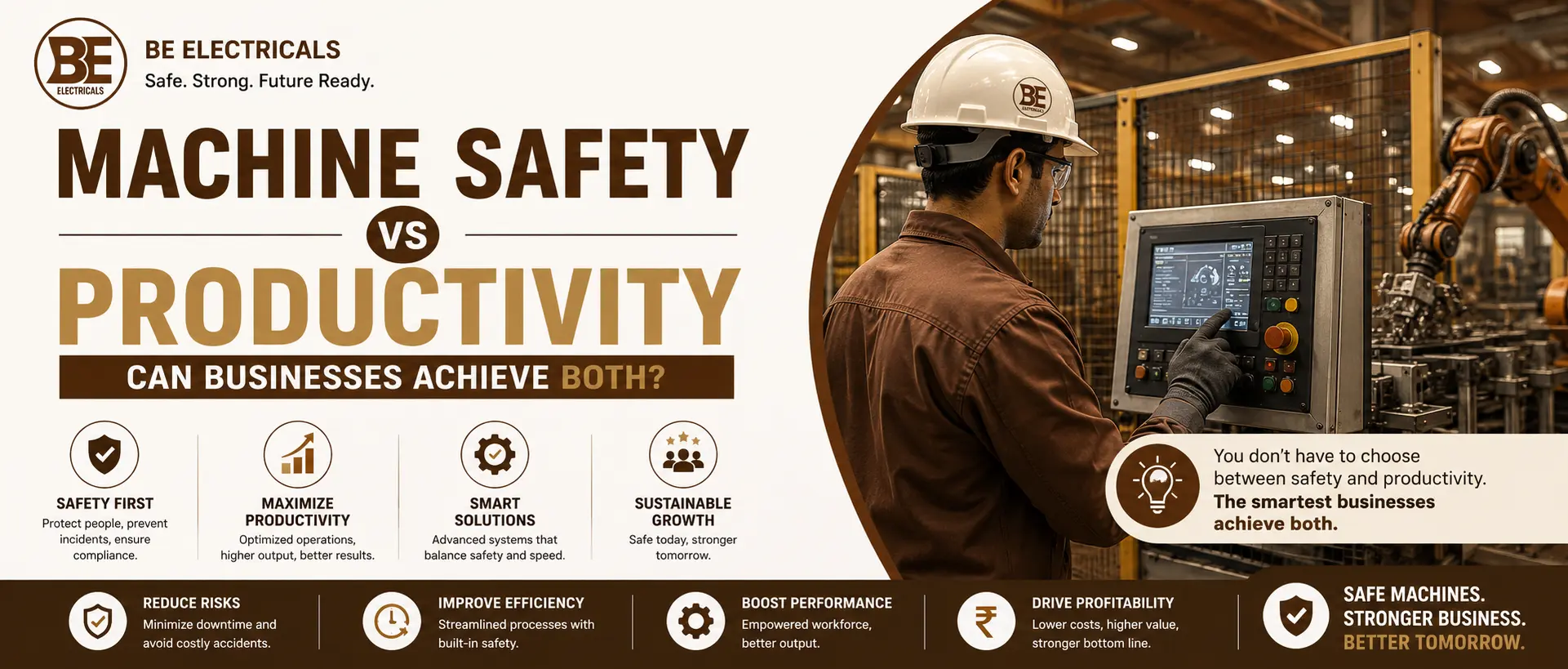
In industrial environments, productivity is often treated as the primary driver of operational success. Faster production cycles, reduced downtime, and higher throughput are critical for maintaining competitiveness. At the same time, machine safety remains non-negotiable due to regulatory requirements, worker well-being, and equipment reliability.
The challenge many manufacturers and plant operators face is balancing these two priorities without compromising either.
Historically, safety systems were viewed as barriers that slowed operations. Emergency stops, guarding systems, lockout procedures, and sensor-based shutdowns were often considered interruptions to workflow. However, modern industrial automation and intelligent safety engineering have changed that perspective significantly.
Today, businesses are increasingly discovering that machine safety and productivity can work together when systems are designed strategically. Companies operating across multiple industrial sectors are adopting integrated safety solutions to reduce operational risks while maintaining efficient production environments. Organizations exploring industrial infrastructure upgrades often evaluate region-specific implementation support through their operational network and service coverage pages.
Machine safety refers to the combination of engineering controls, safety devices, procedures, and operational practices designed to prevent accidents, injuries, and equipment damage during machine operation. It includes safeguards such as emergency stop systems, interlocks, light curtains, safety relays, and risk assessment protocols that help ensure safe interaction between workers and industrial machinery.
Productivity in industrial environments measures how efficiently resources such as labor, machinery, energy, and time are used to produce output. High productivity is typically associated with optimized workflows, reduced downtime, faster cycle times, and consistent production quality without unnecessary operational interruptions.
The assumption that stronger safety measures reduce productivity is becoming outdated. In reality, unsafe environments often create the very disruptions businesses aim to avoid.
Industrial accidents can lead to:
When safety incidents occur repeatedly, productivity suffers over the long term.
On the other hand, well-designed safety systems help businesses create predictable operations. Operators work with greater confidence, machines experience fewer emergency failures, and maintenance teams can identify issues before they escalate.
In sectors involving robotics, heavy machinery, automated production lines, conveyors, CNC systems, and electrical control panels, safety integration has become part of operational efficiency rather than a separate compliance exercise.
Modern industrial safety is no longer limited to physical barriers and manual shutdowns. Advanced safety architectures now operate intelligently alongside production systems.
1. Real-Time Hazard Detection
Safety sensors and monitoring systems continuously detect unsafe conditions before they lead to incidents.
Examples include:
These systems allow machinery to slow down, stop selectively, or reroute processes instead of shutting down entire production lines.
2. Reduced Unplanned Downtime
Equipment failures caused by unsafe operating conditions often result in lengthy shutdowns.
Predictive safety mechanisms help identify:
By addressing these conditions early, businesses reduce downtime and improve machine availability.
3. Faster Troubleshooting and Maintenance
Integrated safety systems improve diagnostics.
Operators and maintenance teams can quickly locate faults using:
This shortens repair cycles and improves operational continuity.
4. Improved Operator Confidence
Workers are more efficient when they feel secure around machinery.
A safer work environment often leads to:
In many facilities, productivity gains come from improved workflow discipline rather than increased machine speed alone.
5. Smarter Automation Integration
Collaborative robotics and Industry 4.0 technologies are transforming industrial safety.
Modern systems combine:
This integration allows businesses to maintain production flexibility while meeting safety standards.
The relationship between safety and productivity is more nuanced than many organizations assume.
Traditional View
Older manufacturing environments often relied on rigid safety mechanisms that halted entire processes during minor disruptions. This created frustration among operators and encouraged unsafe workarounds.
Modern Approach
Today’s safety engineering focuses on minimizing operational disruption while protecting workers and equipment.
Examples include:
Traditional Safety Model |
Modern Safety Model |
|
Full machine shutdown |
Selective zone shutdown |
|
Manual inspections |
Sensor-driven monitoring |
|
Reactive maintenance |
Predictive maintenance |
|
Fixed guarding only |
Intelligent safeguarding |
|
Isolated systems |
Integrated automation |
The objective is no longer choosing between safety and productivity. The focus is designing systems where both reinforce operational stability.
Step 1: Conduct a Comprehensive Risk Assessment
Every machine and workflow should be evaluated for potential hazards.
This includes:
Risk assessments help identify where safety improvements can also improve operational reliability.
Step 2: Integrate Safety Early in System Design
Retrofitting safety systems after production issues arise is usually more expensive and less effective.
Businesses should integrate:
during the early design phase.
Step 3: Train Operators Consistently
Even advanced safety systems can fail when employees bypass procedures.
Training should cover:
Step 4: Use Data for Continuous Improvement
Industrial safety generates valuable operational data.
Facilities can monitor:
These insights help refine both safety and production efficiency.
Step 5: Align Safety With Operational Goals
Safety should not operate separately from production planning.
The most effective facilities treat safety metrics as operational performance indicators alongside output and quality measurements.
Successful machine safety strategies typically include:
Documentation consistency is especially important in regulated industrial environments.
Ignoring Small Safety Incidents
Minor incidents often signal deeper operational weaknesses. Repeated small failures can eventually lead to major disruptions.
Overcomplicating Safety Systems
Excessively restrictive controls may encourage operators to bypass safety procedures.
Safety systems should remain practical and workflow-compatible.
Delayed Maintenance
Poorly maintained equipment creates both productivity losses and safety risks.
Routine inspection schedules are essential for operational stability.
Inadequate Operator Training
Even advanced automation systems depend on informed human interaction.
Insufficient training increases the likelihood of misuse and production errors.
Treating Safety as Compliance Only
Facilities focused solely on passing inspections may overlook broader operational improvements.
The most effective safety cultures treat protection and efficiency as interconnected goals.
Before upgrading machine safety systems, businesses should evaluate:
Long-term operational planning is often more effective than isolated safety upgrades.
Yes. Modern safety systems reduce unplanned downtime, improve maintenance visibility, and support stable machine operation. Well-designed safety infrastructure often improves workflow consistency rather than slowing production.
Workers may bypass safeguards when systems interrupt workflow excessively or lack usability. Poor training and unrealistic production pressure can also contribute to unsafe operational behavior.
Industries involving automation, robotics, material handling, packaging, metal fabrication, pharmaceuticals, automotive manufacturing, and electrical systems typically see significant operational benefits from integrated machine safety.
No. While compliance is important, machine safety also improves equipment reliability, reduces downtime, supports workforce retention, and enhances operational continuity.
Safety systems should be reviewed regularly, especially after equipment upgrades, workflow changes, incidents, or production expansions. Periodic audits help maintain both compliance and operational performance.
Machine safety implementation becomes more complex in facilities with automated systems, legacy equipment integration, multi-machine communication networks, or high-speed production environments.
Professional guidance may help when businesses need:
External expertise is particularly useful when balancing operational continuity with evolving safety requirements.
The debate between machine safety and productivity is gradually shifting from opposition to integration. Modern industrial operations increasingly recognize that unsafe environments create inefficiencies that directly affect production stability.
Businesses that invest in thoughtful safety engineering often experience improved equipment reliability, better workforce confidence, reduced downtime, and stronger operational consistency.
Achieving both safety and productivity requires strategic planning, practical system design, ongoing training, and continuous evaluation. For organizations navigating complex industrial environments, consulting experienced automation and electrical professionals can help ensure that safety improvements support long-term operational performance rather than disrupt it.
If you have any questions, concerns, or support requests, feel free to reach out to us through Contact us page or for more information visit our About Us page.